Red Mosque Colombo: The most captivating and Iconic Jami Ul-Alfar Architectural Marvel (2026)
Red Mosque Colombo: The Candy-Striped Architectural Wonder of Pettah
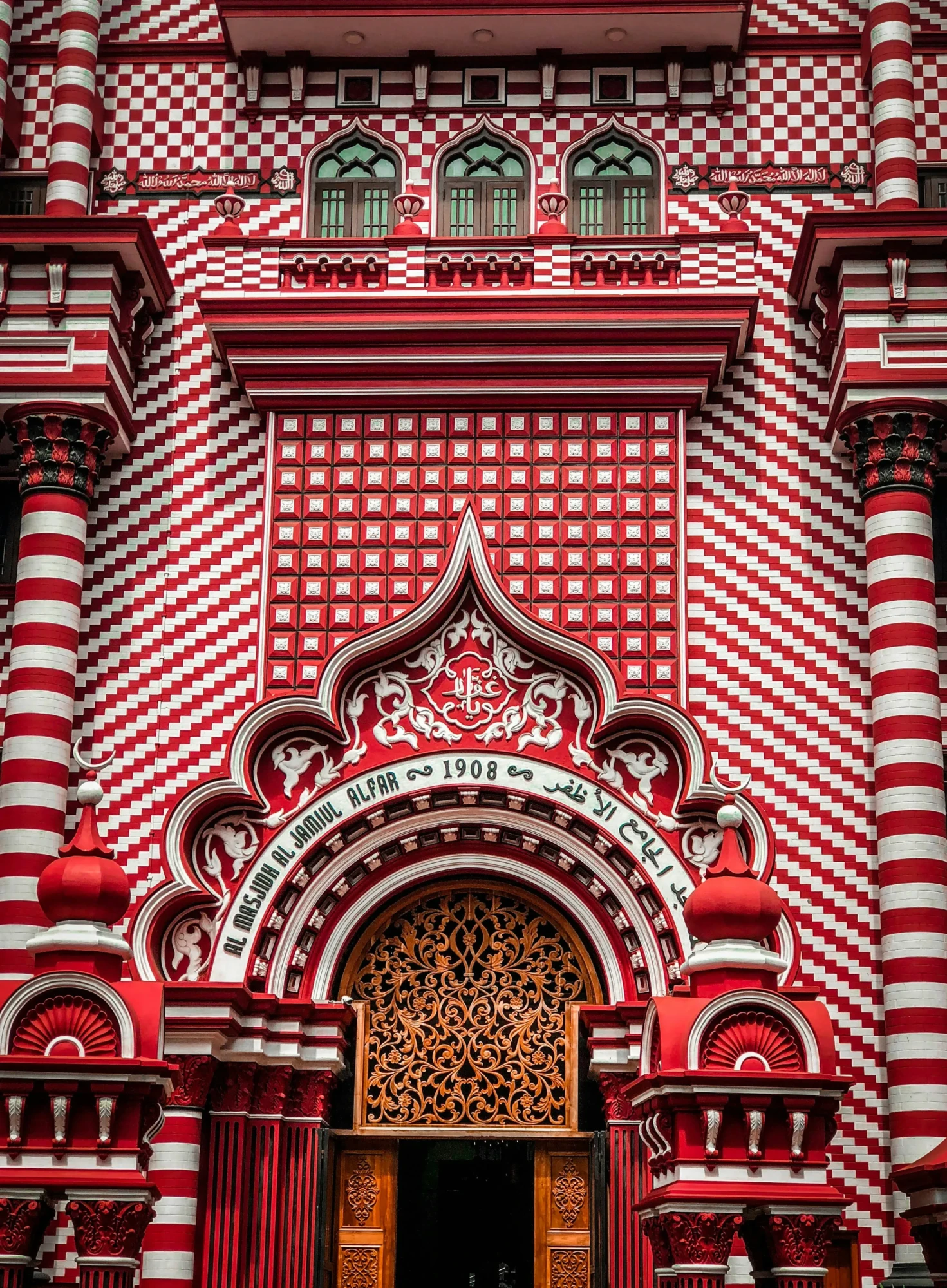
Rising dramatically from the bustling streets of Colombo’s Pettah district, the Jami Ul-Alfar Mosque—affectionately known as the Red Mosque, Rathu Palliya, or Samman Kottu Palli—stands as one of Sri Lanka’s most captivating architectural treasures . With its mesmerizing red-and-white striped facade, towering minarets, and pomegranate-shaped domes, this historic mosque has been a beloved landmark for over a century, serving as a spiritual sanctuary, a visual guide for sailors, and a must-visit destination for travelers exploring Colombo’s vibrant cultural tapestry .
A Vision Born from Community Need
The story of the Red Mosque began in the early 20th century when the growing local Indian Muslim community in Pettah, a bustling commercial hub, recognized the need for a central place of worship to perform their five daily prayers and Jummah (Friday) congregations . These South Indian Muslim traders had settled in Colombo during British colonial rule and required a mosque that could accommodate their spiritual needs . A trust was registered, a plot of land on Second Cross Street was purchased, and construction commenced in 1908, with the mosque being completed and opened to devotees just one year later, in 1909 .
An Unlettered Architect and a Timeless Design
What makes the Red Mosque’s creation even more remarkable is the story of its designer and builder, Habibu Lebbe Saibu Lebbe, who was an unqualified, unlettered architect . Despite lacking formal training, Saibu Lebbe crafted a masterpiece that draws inspiration from Indo-Saracenic, Gothic Revival, and Neoclassical styles, creating a hybrid architectural language that is both eclectic and harmonious . He based his designs on images and descriptions of Indo-Saracenic structures provided by the South Indian traders who commissioned the mosque . The result is a building that feels both timeless and utterly unique.
The Pomegranate Inspiration: Color and Form
The mosque’s most distinctive feature is its captivating red and white striped facade, a bold design choice that has earned it the nickname “Red Mosque” . According to mosque officials, the unconventional color scheme was inspired by the inside of a pomegranate, with the five domes also designed to take on the shape of the fruit . Each brick was meticulously hand-painted, featuring striped, checkered, jagged, and spiral variegations . The mosque’s 49 minarets, each topped with crescents pointing toward the Kaaba in Makkah, and its prominent clock tower, further contribute to its striking silhouette .
Red Mosque Colombo: A Landmark for Sailors and Travelers
For much of the 20th century, before the construction of other landmarks, the Red Mosque was recognized as the primary landmark of Colombo by sailors approaching the port . Its towering minarets and bold colors could be seen from miles out at sea, providing a reliable visual guide for mariners . This navigational role cemented the mosque’s place in local lore and made it an enduring symbol of the city.
Growth and Expansion
Originally built as a two-story structure with the capacity to accommodate 1,500 worshippers (though only about 500 attended prayers in its early years), the mosque has undergone significant expansion over the decades . In 1975, the Haji Omar Trust facilitated the purchase of adjoining properties, leading to a major expansion that increased the mosque’s capacity to 10,000 worshippers . Today, the complex covers approximately 50,000 square meters and can hold up to 12,000 devotees, a testament to the continued growth of the Muslim community in Colombo . During Friday prayers, worshippers often spill out onto the surrounding streets, a vivid scene of communal devotion .
Visitor Information
To make the most of your visit to the Red Mosque, keep these practical details in mind:
- Location: 228 Second Cross Street, Pettah, Colombo 01100, Sri Lanka .
- Timings: The mosque is open to visitors on days when there are no prayer services, typically with visiting hours around 10:30 AM – 12:00 PM, 1:00 PM – 3:00 PM, and 4:15 PM – 6:00 PM . It is advisable to confirm timings in advance, as services take precedence.
- Entry Fee: Free .
- Dress Code: Modest attire is required. Women are requested to cover their hair, arms, and legs before entering the mosque .
- Etiquette: Visitors of all faiths are welcome. Remove your shoes before entering and maintain a respectful silence .
- Best Time to Visit: Weekday mornings are recommended to avoid crowds and experience the serene atmosphere inside .
- Nearby Attractions: The mosque is surrounded by the vibrant Pettah market, offering textiles, spices, electronics, and fresh produce.
Why the Red Mosque Should Be on Your Itinerary
For travelers exploring what to do in Colombo, the Red Mosque is an essential stop. It offers a unique opportunity to witness a living place of worship that is also a recognized architectural masterpiece . The combination of its vivid colors, fascinating history, and the vibrant energy of the surrounding Pettah bazaar creates an experience that is both visually stunning and culturally enriching.