Colombo Fort Clock Tower: The Historic Lighthouse & Big Ben’s Sri Lankan Sister (2026)
Colombo Fort Clock Tower: The Historic Lighthouse That Became a Timepiece
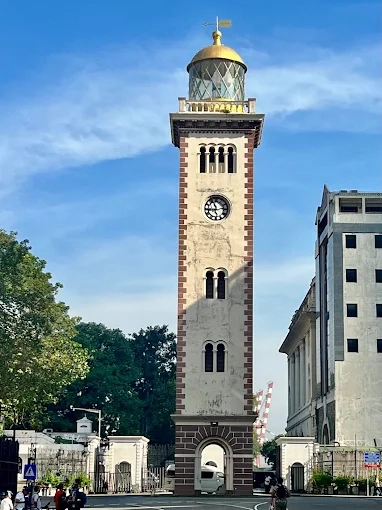
Standing sentinel at the busy intersection of Chatham Street and Janadhipathi Mawatha in the heart of Colombo’s Fort district, the Old Colombo Lighthouse & Clock Tower is one of Sri Lanka’s most enduring and beloved colonial landmarks. For over 165 years, this 29-meter (95-foot) tower has silently witnessed the transformation of Colombo from a colonial outpost to a modern metropolis. It is a structure with a dual identity—a lighthouse that guided ships and a clock tower that has marked the city’s rhythm for generations.
A Lady’s Design and a Governor’s Vision
The story of the clock tower begins in the mid-19th century. The structure was built between 1856 and 1857 and formally commissioned on 25 March 1857. Remarkably, its design came from Emily Elizabeth Ward, the wife of the then British Governor, Sir Henry George Ward. The construction was carried out by the Public Works Department under the supervision of Mr. John Flemming Churchill, the Director General of Public Works. At the time of its completion, the tower was the tallest structure in Colombo, a testament to the engineering capabilities of the era and a dominant feature of the city’s skyline.
The Big Ben Connection
One of the most fascinating aspects of the clock tower is its connection to London’s most famous timepiece. The clock mechanism was manufactured by the renowned English clockmakers, Dent, who were also responsible for creating the clock for Big Ben at the Palace of Westminster in 1852. The original clock mechanism, however, had a long and storied journey. It was originally commissioned in 1814 for £1,200 by Governor Sir Robert Brownrigg but was kept in a warehouse for economic reasons until it was finally installed in the tower in 1857. The original clock was eventually replaced in October 1913, and the tower was re-inaugurated with its new clock on 4 April 1914.
A Lighthouse in the City
Before the clock tower’s construction, the original Colombo lighthouse stood on a bastion on the ocean edge of the fort. This neo-classical structure, built in 1829, featured a 23-meter wooden light tower rising from a two-story circular brick building. It was demolished between 1869 and 1871 with the removal of the fort ramparts.
The navigational light was subsequently moved to the new clock tower in 1867. The clockwork-operated revolving dioptric light, constructed by Chance Brothers, was a marvel of its time. Powered initially by kerosene oil, the white revolving double light showed a triple flash lasting a second with an 18-second wait. The light had a focal plane of 140 meters (460 feet) above sea-level and was visible for up to 27 kilometers (17 miles) in clear weather. In 1907, the light was converted to gas, and in 1933, it was replaced with a 1,500-candle-power electric light.
After nearly a century of service, the lighthouse was decommissioned on 12 July 1952, as its light became obscured by the construction of nearby tall buildings. The modern Galle Buck Lighthouse on Marine Drive took over its vital role.
A Modern Landmark: ‘Kilometer Zero’
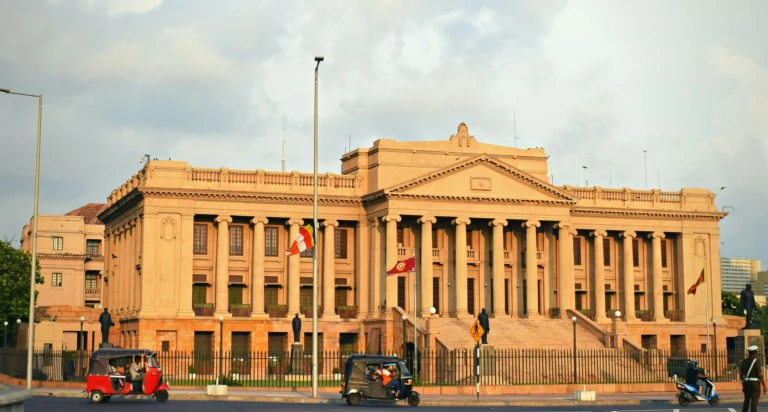
Though its light no longer guides ships, the Colombo Fort Clock Tower remains a functional timepiece and a significant historical monument. It is also recognized as the “zero-mile marker” for Sri Lanka, the point from which all distances to and from the capital city are measured. In 1996, the tower was damaged in the Central Bank bombing and ceased to function for a time, but it was later restored to working order. Today, it stands as a popular and photogenic landmark for visitors exploring Colombo’s rich colonial history, surrounded by other heritage buildings like the Old Dutch Hospital and the Presidential Secretariat.
Visitor Information
- Location: Junction of Chatham Street and Janadhipathi Mawatha, Colombo Fort.
- Timings: The tower is viewable from outside at all times. Interior access is not generally open to the public.
- Entry Fee: Free to view from the street.
- Best Time to Visit: Mornings or late afternoons are best for photography and avoiding the midday heat.
- How to Get There: Easily accessible by tuk-tuk from Colombo Fort Railway Station or as part of a walking tour of the Fort area.