Old Parliament Building Colombo: Sri Lanka’s Magnificent Presidential Secretariat (2026)
Old Parliament Building Colombo: A Neo-Baroque Masterpiece by the Sea
Standing majestically along the edge of Galle Face Green, with the Indian Ocean stretching endlessly before it, the Old Parliament Building Colombo is one of Colombo’s most iconic and historically significant landmarks . This grand neo-Baroque structure, completed in 1930, served as the seat of Sri Lanka’s legislature for 53 years before being transformed into the Presidential Secretariat . Today, it remains a powerful symbol of the nation’s colonial past and its journey toward independence and self-governance.
A Vision Born in the Colonial Era
The idea for a new legislative building was first proposed by Sir Henry McCallum in 1912, but it wasn’t until 1920 that the government formally approved a plan to construct a “Secretariat, Council Chamber and Government offices on reclaimed land at the northern end of Galle Face” . The site, reclaimed from the Beira Lake, required special reinforcement with heavy concrete piles to support the massive stone structure .
Chief Architect Austin Woodeson of the Public Works Department was tasked with the design . His initial estimate of Rs 400,000 was later revised to Rs 450,000 to account for additional expenses, including lifts . Construction was carried out by Walker Sons and Company, and the building was officially opened on 29 January 1930 by Governor Sir Herbert Stanley .
Architectural Brilliance: Old Parliament Building Colombo Meets Tropical Adaptation
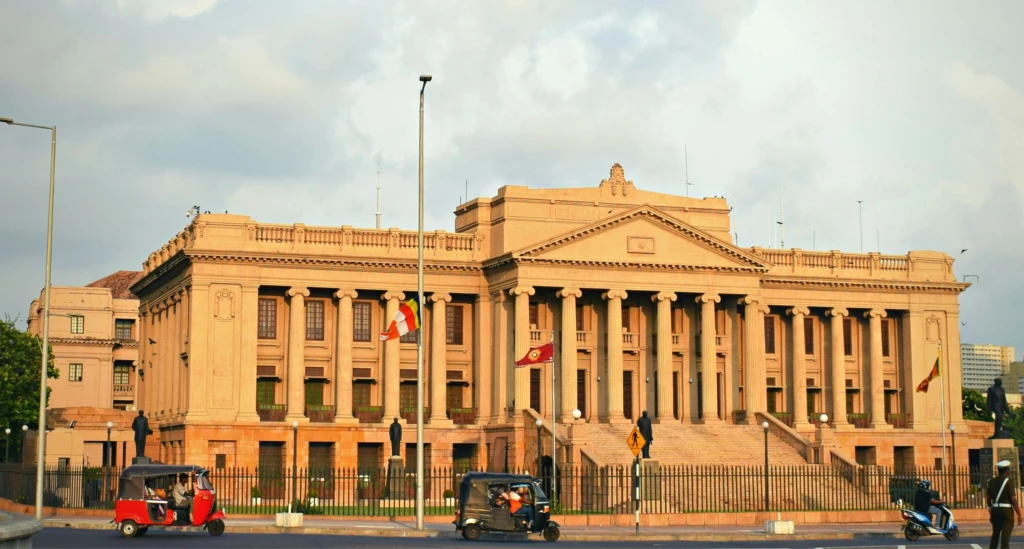
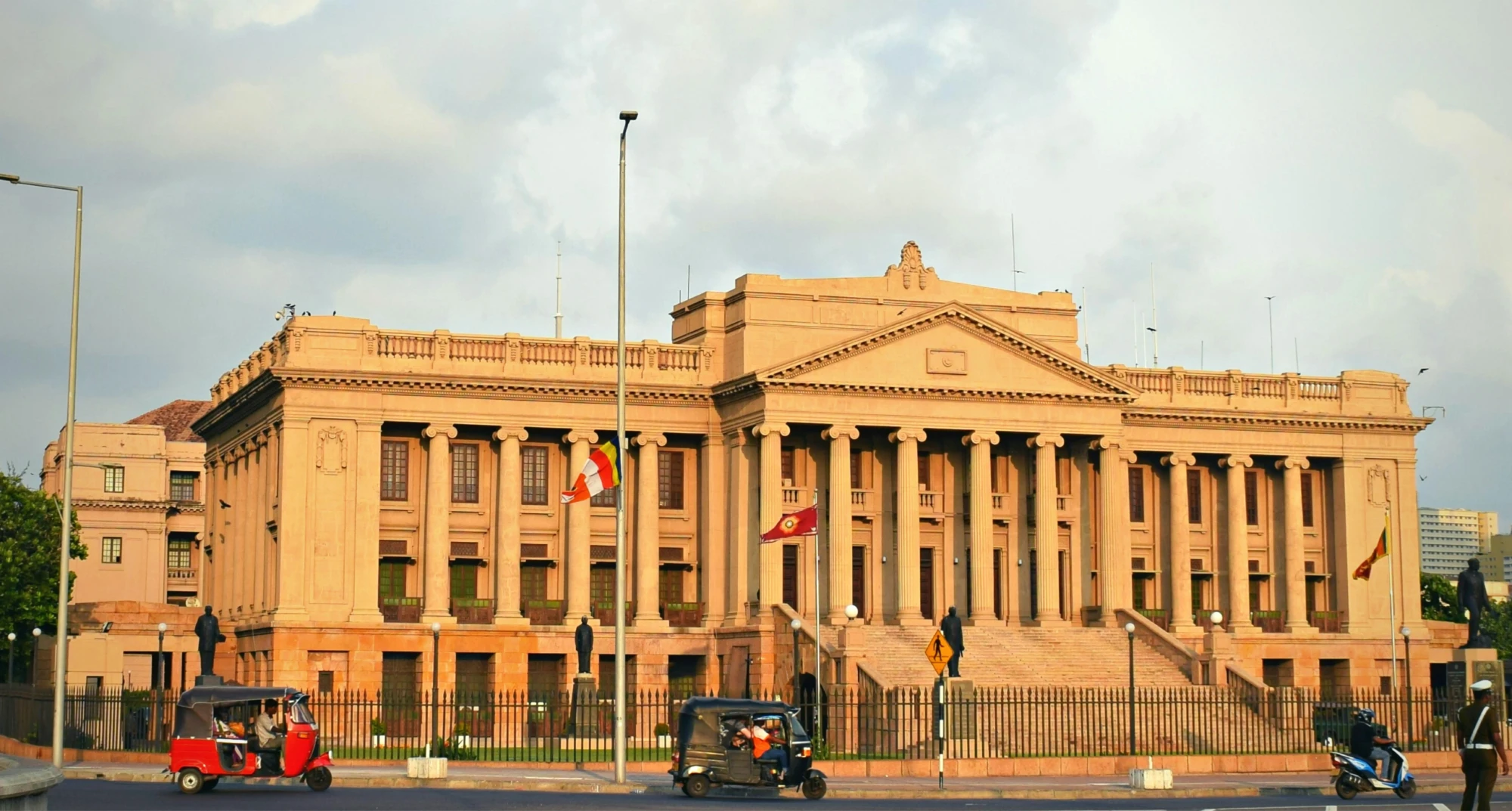
The Old Parliament Building Colombo is a stunning example of neo-Baroque architecture , often described as a fusion of classical Greek and Roman influences with adaptations for Sri Lanka’s tropical climate . The design incorporates elements of the Ionic architectural order, characterized by decorative columns and a sense of grandeur .
Key Architectural Features
- Imposing Columns: The grand, fluted Ionic columns that dominate the façade are designed with subtle angles to create an optical illusion of perfect straightness when viewed from a distance .
- Tropical Adaptations: Despite its European classical inspiration, the building incorporates features of tropical architecture . These include thick walls, extended eaves to shield interiors from direct sunlight, and wide verandahs designed to maximize sea breezes and natural ventilation .
- Solid Construction: The basement stones were quarried from Ruwanwella, with approximately 1,530 tons of stone transported to the site . The heaviest single girder weighed 7 tons and was 51 feet long .
- A Grand Entrance: A flight of 20 steps, each 50 feet wide, leads to five large doorways at the main entrance . A 30-foot-wide corridor behind the entrance hall adds to the building’s sense of spaciousness and classical elegance .
53 Years of Legislative History
The building served as the meeting place of Ceylon’s legislature for over five decades . A year after its opening, it was taken over by the State Council of Ceylon . It housed the House of Representatives after self-rule in 1947, the National State Assembly after the 1972 republican constitution, and was renamed the Parliament of Sri Lanka in 1977 .
In 1983, Parliament was relocated to a new purpose-built complex in Sri Jayawardenapura Kotte, and the old building became the home of the Presidential Secretariat, housing the Office of the President . Today, it remains the venue for many state functions, including the acceptance of letters of credence from incoming ambassadors .
The Garden of Statues
In front of the building, a beautifully maintained garden features bronze statues of several of Sri Lanka’s most prominent statesmen . These include Rt Hon D. S. Senanayake (the first Prime Minister of independent Ceylon), S. W. R. D. Bandaranaike (the fourth Prime Minister), and General Sir John Kotalawela .
Visitor Information
- Location: Galle Face, Colombo Fort (facing the Indian Ocean, adjacent to Galle Face Green) .
- Timings: The building is not open for public entry due to high security, but its exterior can be admired 24/7 .
- Entry Fee: Free to view from the outside.
- Best Time to Visit: Sunset offers the most spectacular views, with the building’s grand façade framed against the colorful sky over the Indian Ocean .
- How to Get There: A 10–15 minute walk from Colombo Fort Railway Station or a short tuk-tuk ride .