Colombo Fort & Pettah Market: A Walking Tour Through History & Bustling Bazaars (2026)
Colombo Fort & Pettah Market: Where Colonial History Meets Bustling Bazaars
In the heart of Sri Lanka’s capital, two distinct worlds collide. Colombo Fort, the city’s historic core and modern financial hub, stands as a testament to centuries of colonial rule and contemporary commerce. Just beyond its former walls lies Pettah, a sprawling, vibrant marketplace where the city’s pulse beats loudest through narrow streets packed with vendors, shoppers, and the intoxicating aroma of street food. A walking tour through these adjoining neighborhoods offers one of the most culturally rich and visually stunning experiences for any traveler visiting Colombo.
Colombo Fort: The Historic Core and Financial Hub
Colombo Fort is not just a name; it is the very foundation upon which modern Colombo was built. The area was first fortified by the Portuguese in 1554 as a trading post and defensive outpost . In 1656, the Dutch East India Company captured the fort, demolishing the Portuguese structures and rebuilding it into a formidable stronghold with massive ramparts and bastions . The Dutch divided the area into two parts: the Fort, which housed their administrative and military headquarters, and the ‘Oude Stad’ (Old Town), which is the present-day Pettah, where the local population resided .
The British, who took control in 1796, continued to use the fort as the center of their administration. However, between 1869 and 1871, they demolished the fort’s walls to make way for urban expansion, leaving behind only a few fragments of this once-mighty fortress . While the ramparts are largely gone, the name “Fort” stuck, and the area remains the financial and commercial heart of Colombo, housing the Colombo Stock Exchange, the World Trade Centre, the Central Bank of Sri Lanka, and numerous other corporate headquarters .
Landmarks of the Fort
Today, a walking tour of Colombo Fort reveals a fascinating architectural tapestry. You’ll find colonial-era buildings standing shoulder-to-shoulder with gleaming modern skyscrapers. Key landmarks to look out for include:
- The Old Parliament Building: This stunning Neo-Baroque structure, built in the Ionic style, now serves as the Presidential Secretariat . Overlooking the Galle Face Green, it’s a symbol of Sri Lanka’s political history.
- President’s House: The official residence of the President of Sri Lanka, this building traces its origins to the Dutch colonial period when it was the residence of the Dutch Governor . It was later known as Queen’s House during the British era .
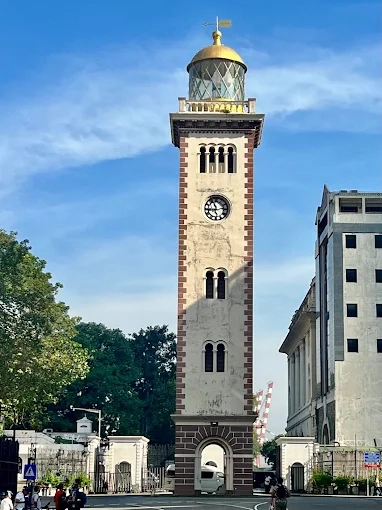
- The Old Colombo Lighthouse (Clock Tower): A 29-meter-high tower built in 1857, this structure is a unique hybrid—a clock tower that once functioned as a lighthouse for Colombo’s harbor. It was designed by Governor Sir Henry George Ward’s wife and remains a popular meeting point .
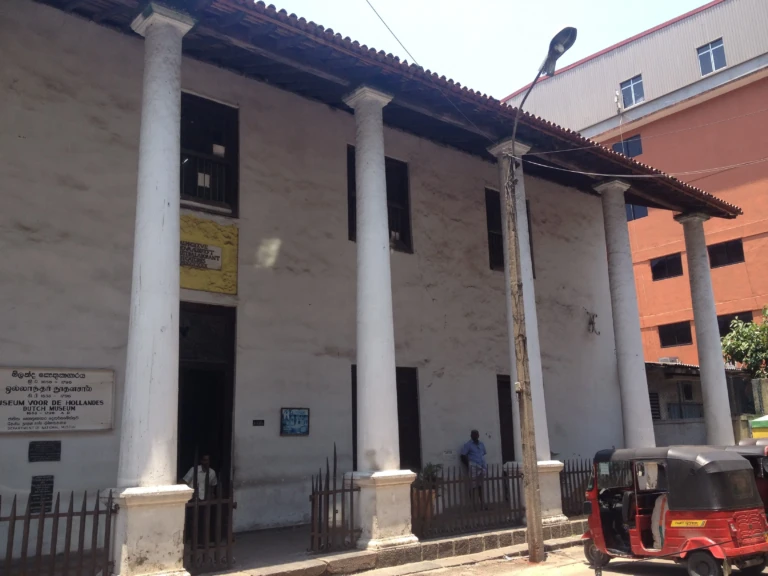
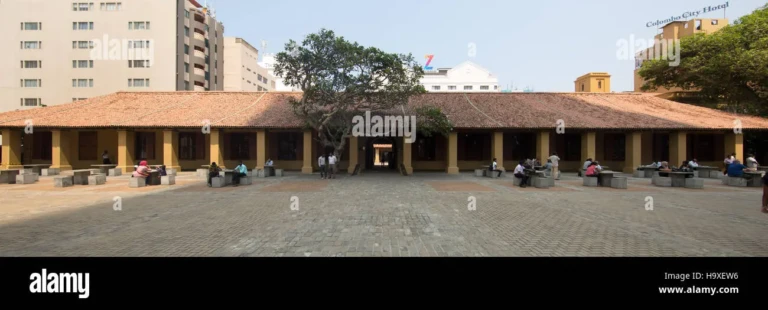
- Old Colombo Dutch Hospital: Dating back to 1681, this is one of the oldest buildings in the fort area . It was originally built by the Dutch as a hospital for their officers and seafarers . Today, after a stunning restoration, it is a heritage shopping and dining precinct featuring restaurants like the Ministry of Crab, cafes, and boutique shops .
Kayman’s Gate: The Crocodile Gate
To understand the connection between the Fort and Pettah, one must look at Kayman’s Gate. This was a historic entrance to the old Colombo Fort, located at the foot of Wolvendaal Hill in the Pettah district . The name comes from the Dutch word kaaiman, meaning crocodile. The Portuguese originally built the fort with a moat that was connected to the Beira Lake. During the Dutch period, mugger crocodiles would congregate in this moat, feeding on the rubbish thrown out by the fort’s inhabitants, which gave the gate its fearsome name .
Until the late 19th century, Kayman’s Gate was also the site of public executions carried out by colonial rulers . A free-standing bell tower still stands at the site today, at the intersection of Main Street and 4th Cross Street . The bell itself is believed to date back to the 16th century and was originally from a Portuguese church . The nearby building at Kayman’s Gate, which is now a post office, once served as the Colombo Old Town Hall and houses a museum upstairs .
Pettah Market: A Labyrinth of Sights and Sounds
Walking through Kayman’s Gate is like stepping into another world—the frenetic, vibrant, and utterly captivating world of Pettah Market. This is not a single structure but a sprawling labyrinth of streets and alleyways, each with its own specialized trade. It is the commercial heart of Colombo and has been a thriving trading hub for centuries .
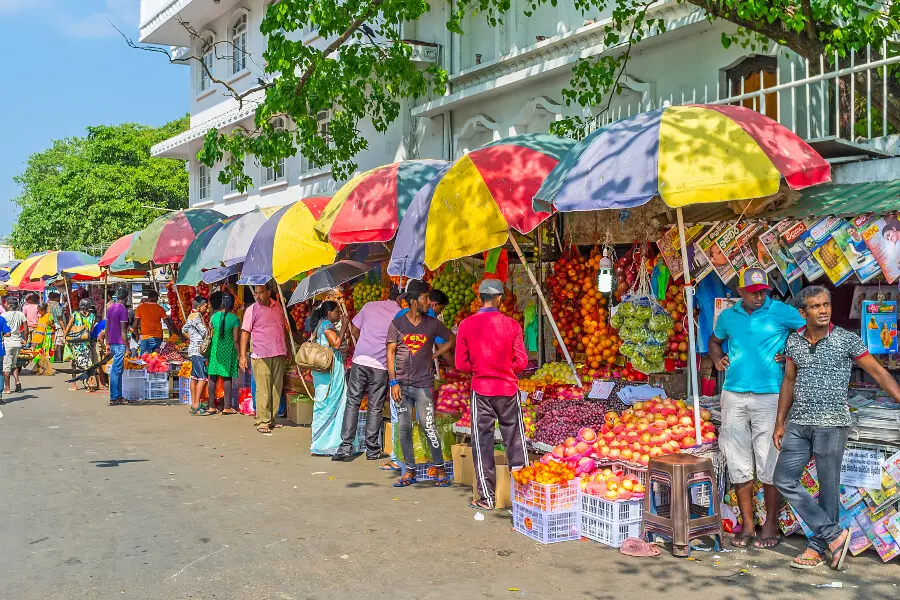
The atmosphere is an assault on the senses: the calls of vendors, the honking of traffic, the vibrant colors of fabrics and produce, and the mingled aromas of spices, exhaust, and street food. This is where locals come to shop for almost everything. You can find:
- Textiles and Clothing: From traditional saris and salwars to modern clothing, the market is a treasure trove of fabrics .
- Gold and Jewelry: Sea Street is particularly famous as Sri Lanka’s main gold market .
- Fresh Produce and Spices: The Manning Market section is overflowing with fruits, vegetables, and every spice imaginable .
- Street Food: Be adventurous and sample local favorites like kottu roti and faluda from the numerous street stalls .
- Electronics and Hardware: The market also offers a vast array of electronics and everyday goods.
Haggling is not just expected but is an essential part of the shopping experience at Pettah Market . It’s a vibrant, colorful, and chaotic place that is pure Colombo. We recommend visiting early in the day to beat the crowds and the heat, and to keep a close watch on your belongings as the streets get extremely crowded .
The Floating Market
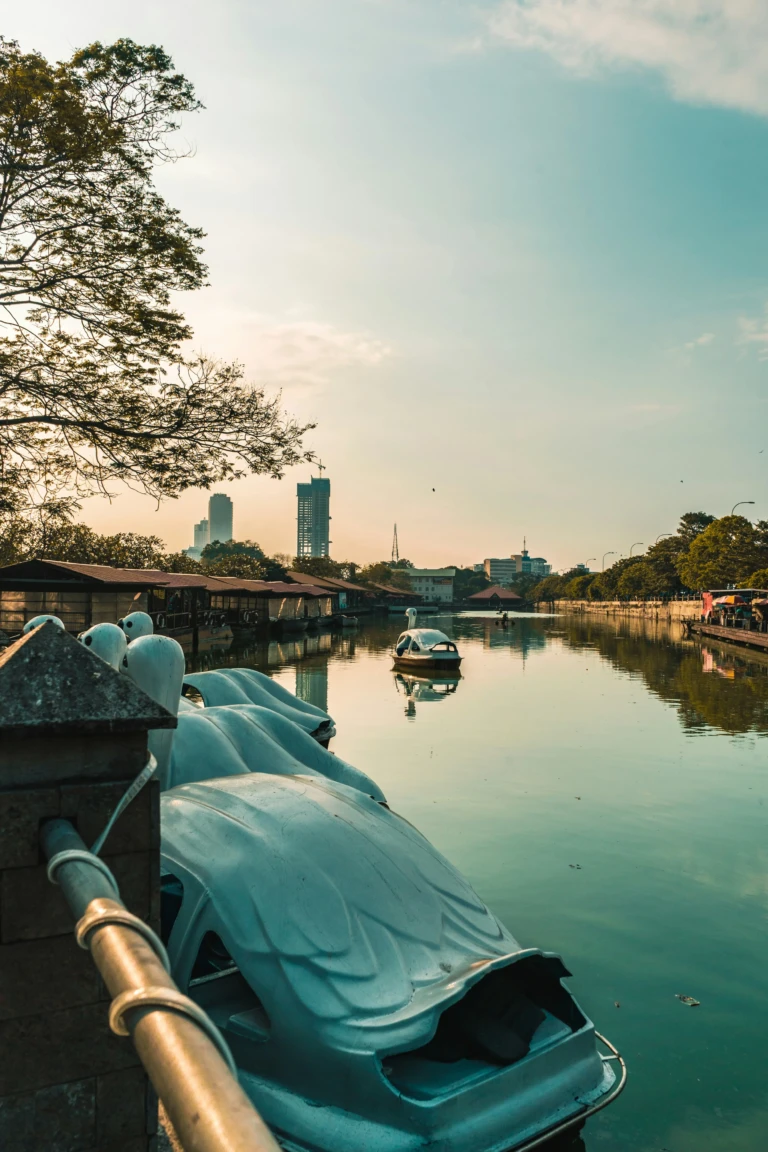
Adding a modern twist to the Pettah experience is the Pettah Floating Market, located on Bastian Mawatha . Built on the Beira Lake by the Urban Development Authority, this market features a number of stalls, with some floating on boats, selling a variety of local produce and handicrafts . It provides a more relaxed shopping environment compared to the main market and offers a unique perspective on the city.
A visit to Colombo Fort and Pettah is an immersion into the soul of Sri Lanka’s capital. It is a journey through time, from the cannons of the Dutch bastions to the glittering gold of Sea Street, offering an unforgettable blend of history, culture, and everyday life.